Sustainability and Local Sourcing
Sustainability
We look for our ingredients here first: Canarian fruit, Canarian growers, whenever the islands can supply them. Our organic line is certified, a clean process from start to finish.
We use real fruit. No flavourings. No concentrates. Just fruit.
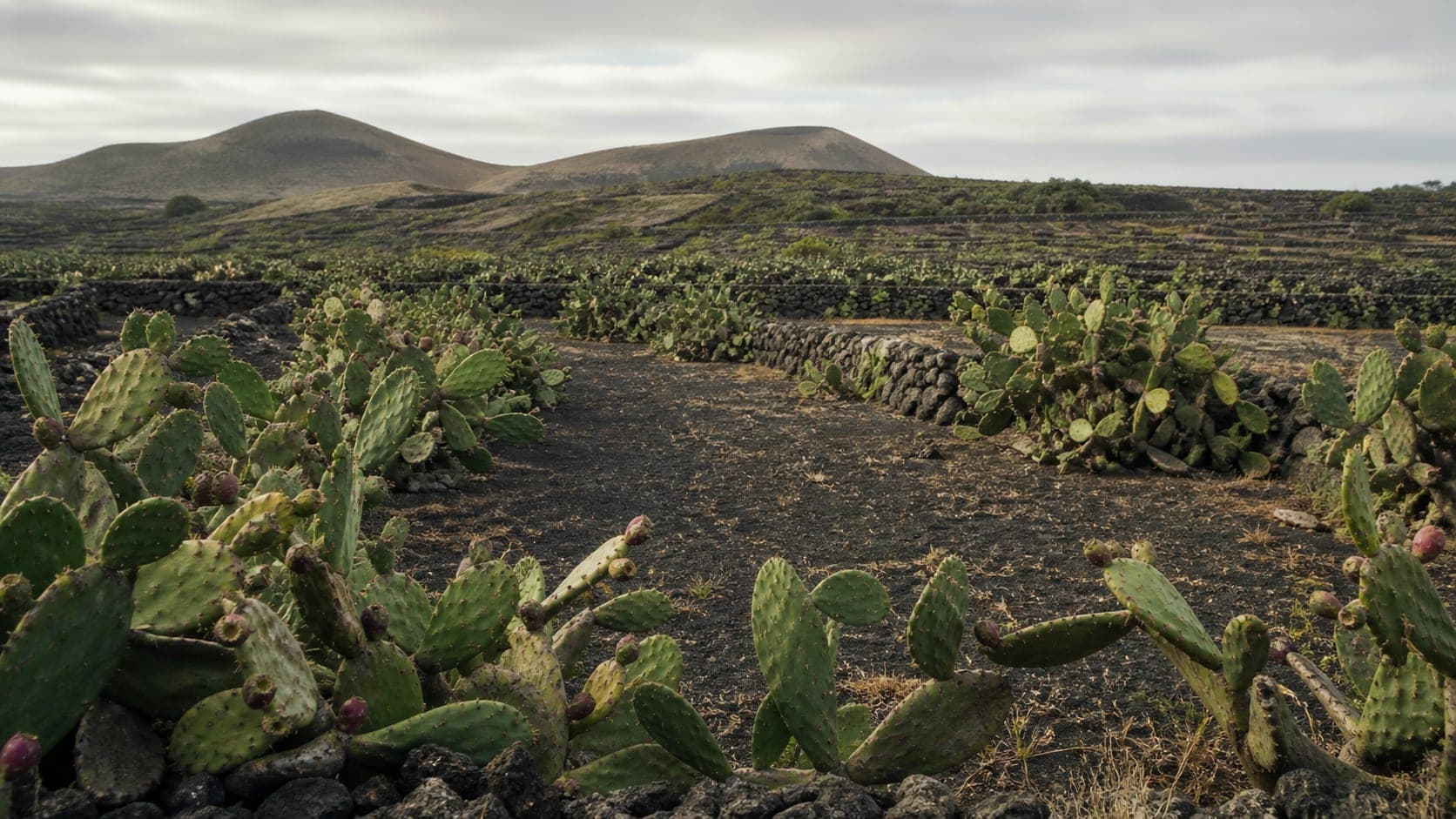
Over 75% of our jams are based on Canarian fruits. It's not a marketing strategy, we started this way, making use of a fruit that grew in Lanzarote and nobody used, and we haven't changed the approach.
The prickly pear, banana and sweet potato we use, as well as the aloe vera juice, are 100% Canarian. The rest of the fruits are varieties that grow on the islands, though we can't always source exclusively from local production.
Glass jars, metal lids, paper labels and a piece of cloth on top. That is all our packaging has ever been, since 1993.
Our packs are wrapped in real cellophane, cellulose rather than plastic film. We bring it in from outside because hardly anyone makes it any more: it costs more, almost nobody notices, and it breaks down.
It was never a response to a trend. By the time plastic became a conversation, we had nothing to change.
What we have in hand right now. They are long-term projects and they all point the same way: more control over our raw material, and less to throw away.
Our own prickly pear cultivation
We want to plant organic prickly pear in Lanzarote, to control where our main raw material comes from and to depend less on third parties. A prickly pear takes years to bear fruit, so it is a long-term decision and we are taking our time over it.
Prickly pear seed oil
Every batch of prickly pear leaves its seeds behind. We are looking into extracting their oil, which has pharmaceutical and cosmetic applications. Today it is still research, not a product.
Tails from the gin distillation
What comes out at the end of distilling gin is normally discarded. We keep it: there is still aroma in there, and we are running test batches to create a new product.
If something can be reused, it is reused.
If a material can be avoided, it is avoided.