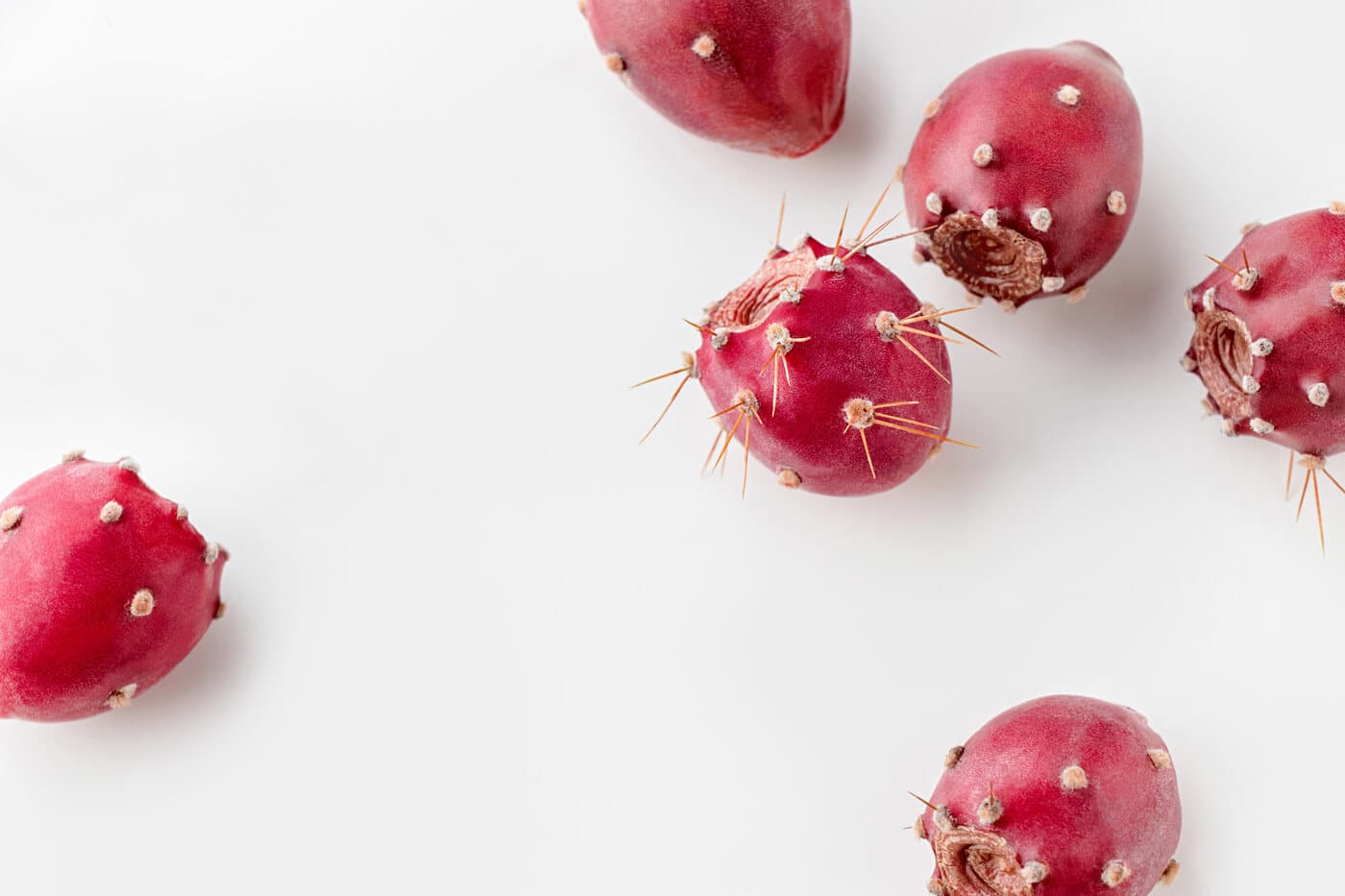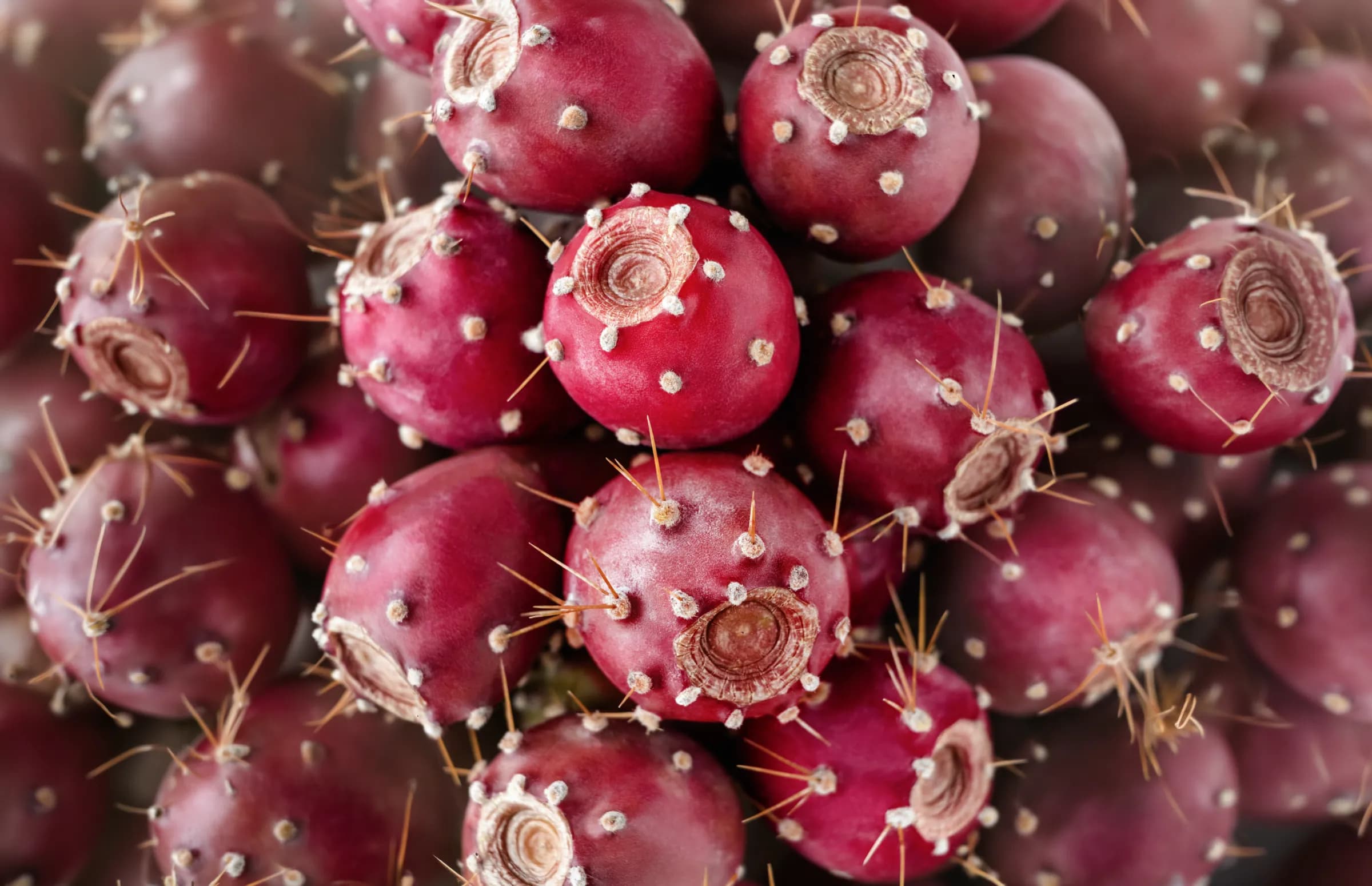
A mass of prickly pears, purple-skinned and still spined

Tuno indio

The tuno indio is the fruit we work with most. It is what our jams and spreads, our liqueurs and our gins are made from. It is the fruit of a prickly pear, Opuntia stricta var. dillenii, and not a Canarian plant however much it looks like one today. We call the plant a tunera, though you will hear chumbera and other names too; the fruit is a tuno indio, and that changes depending which island you are on, higo pico, penca india, higo tinto…

How did it reach the Canaries?

Every cactus is American in origin, and Opuntia Dillenii comes from the Caribbean, the coasts of Mexico, the Antilles, Central America. It crossed the Atlantic on ships, after 1492.

The Canaries turn the prickly pear into a business and export carmine

From 1825 the islands were planted with prickly pear on a great scale to farm cochineal, the insect carmine is made from. It became a major industry, and the islands' principal export until the 1870s.

When aniline dyes arrived the market collapsed within a few years and the plantations were abandoned. The prickly pears stayed, and the Dillenii carried on by itself down to the coastal lowlands, where we pick it today.

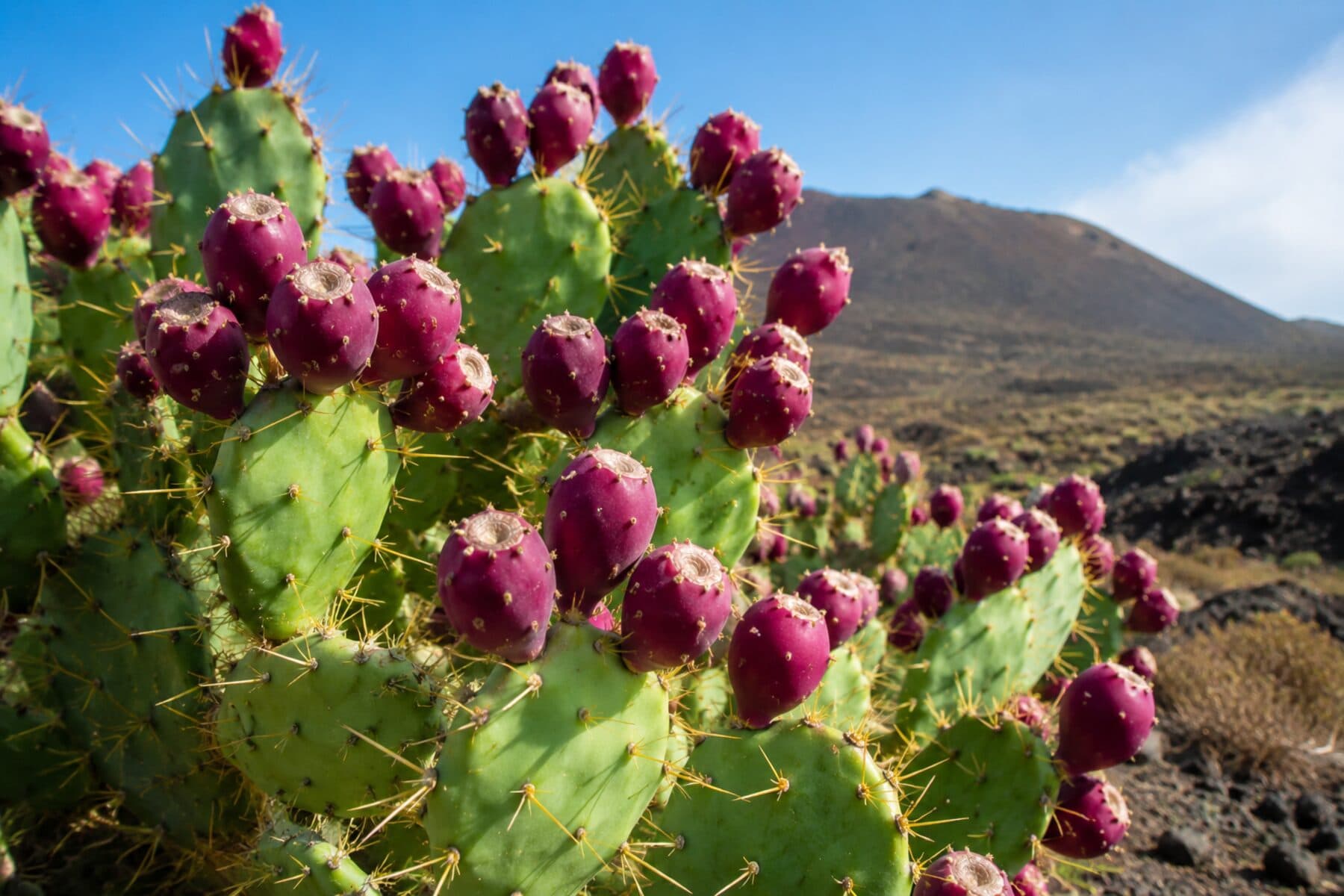
Prickly pear pads heavy with fruit on volcanic ground

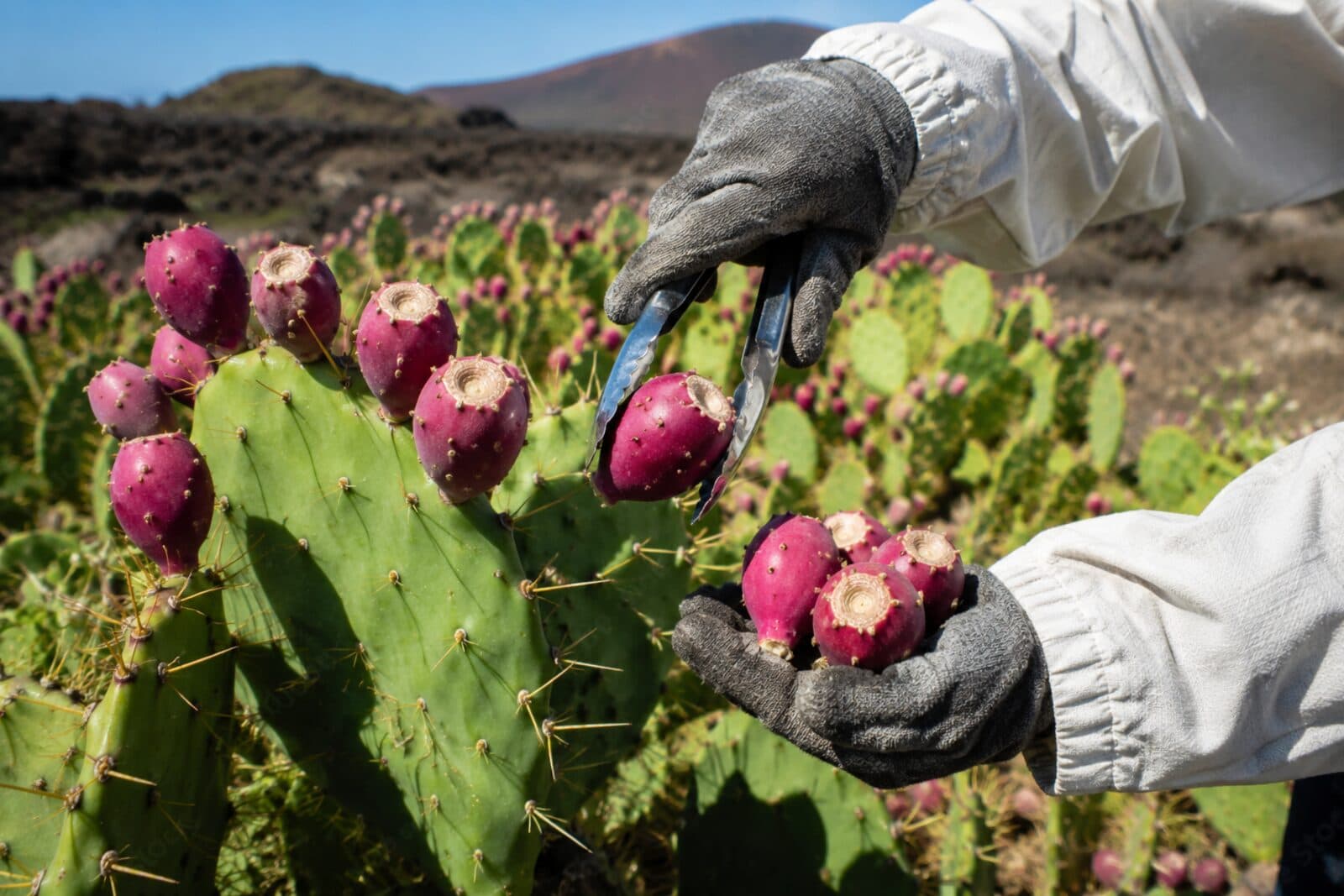
A tunera carrying fruit at the right moment to pick – Lanzarote

Every white dot is an areole. Out of it come the glochids: tiny barbed hairs that detach at the lightest touch.

The fine spines

What you cannot see

Every white dot is an areole. Out of it come the glochids: tiny barbed hairs that detach at the lightest touch.

It is picked with gloves, tongs, boots and the whole body covered. It makes no difference. The wind and your own movement carry them everywhere — onto clothes, arms, face — and once under the skin they are invisible: sometimes they take a day or two to work their way out.

You can dodge the long spines. Not these.

Nobody planted it

We do not grow it, water it or feed it. It is simply there.

Opuntia dillenii has been on Spain's register of invasive alien species since 2013. It spreads by itself, unaided, across dry ground where almost nothing else will.

That does not make us the solution to an ecological problem — we are not going to say that. It lets us work with a raw material that is already on the islands, instead of bringing in another from somewhere else.
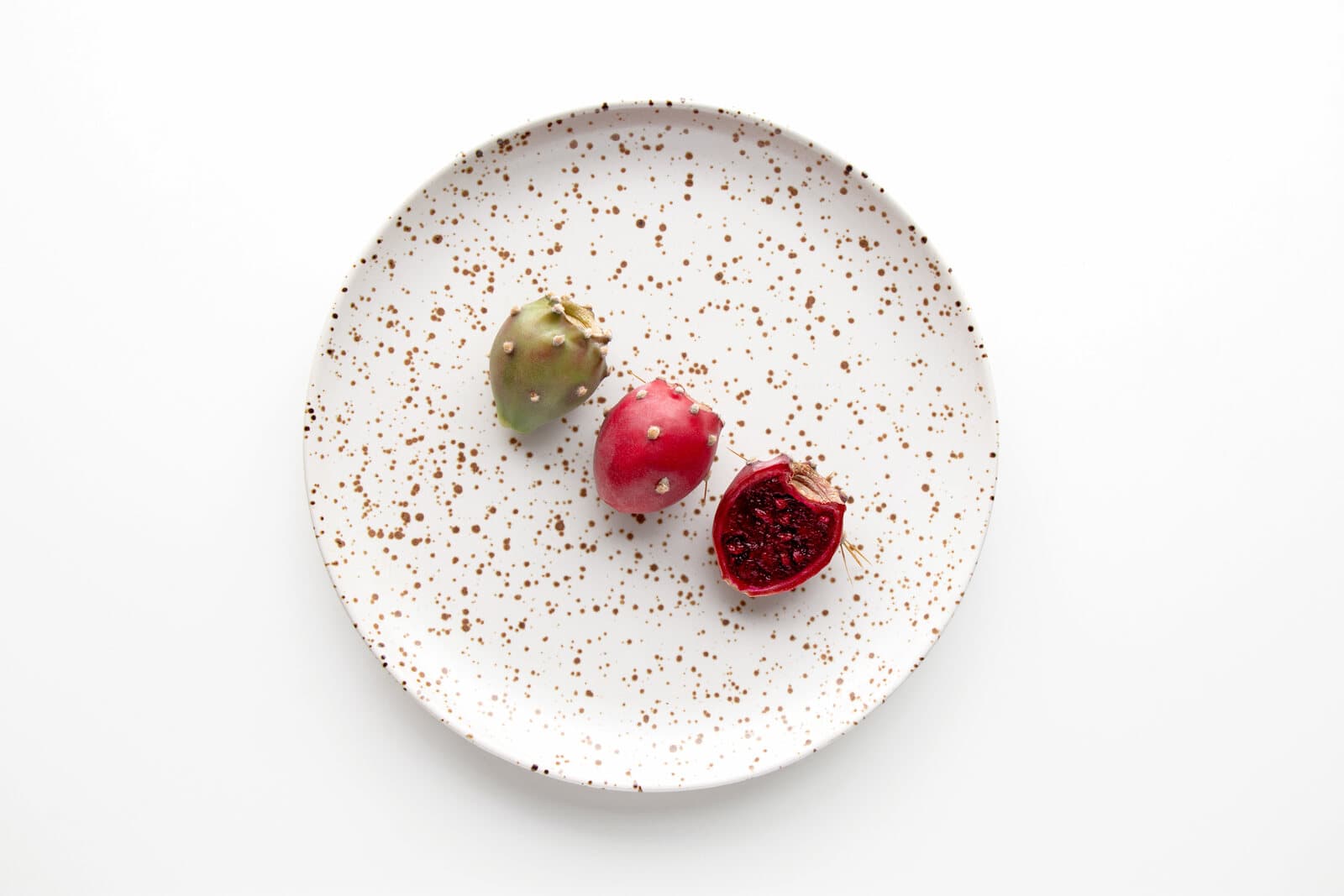
Two halves of a prickly pear, red flesh and seeds showing
Purple outside. Inside, a red that does not look like food.

Why is it that colour?

That red is betalains: the fruit's own pigments. In the tuno indio the colour is not added, it is the fruit.

A study by CIAL (CSIC-UAM) and ICIA identified sixty compounds — betalains and phenolic compounds — in this species. We contributed fruit and samples from our production to that work, and we sponsored the XI International Congress on Cacti as Food, held in Tenerife in 2025.

The harvest

Three harvests a year. August and September are almost empty: no new fruit.

The fruit comes from Tenerife, Gran Canaria and Lanzarote, and the name changes with it.

123456789101112no fruit

Each cycle takes ninety to a hundred days. The three of them fill the year.

Gloved hands picking prickly pears from the plant

What does it taste like?

Sweet, but not very. Closer to melon and fig than to any tropical fruit. It is not sharp and it is not exotic.

And it has seeds. Plenty. If you eat it fresh, you eat them with it.

A prickly pear cut open on a ceramic plate

What we make from it

The seeds

There are no seeds in our products: they are separated during production. What is left is a by-product full of them.

We are studying how to extract oil from them, and we want to grow tuno indio organically on Lanzarote so we depend less on others. A prickly pear takes years to bear fruit, so this is counted in years, not months.